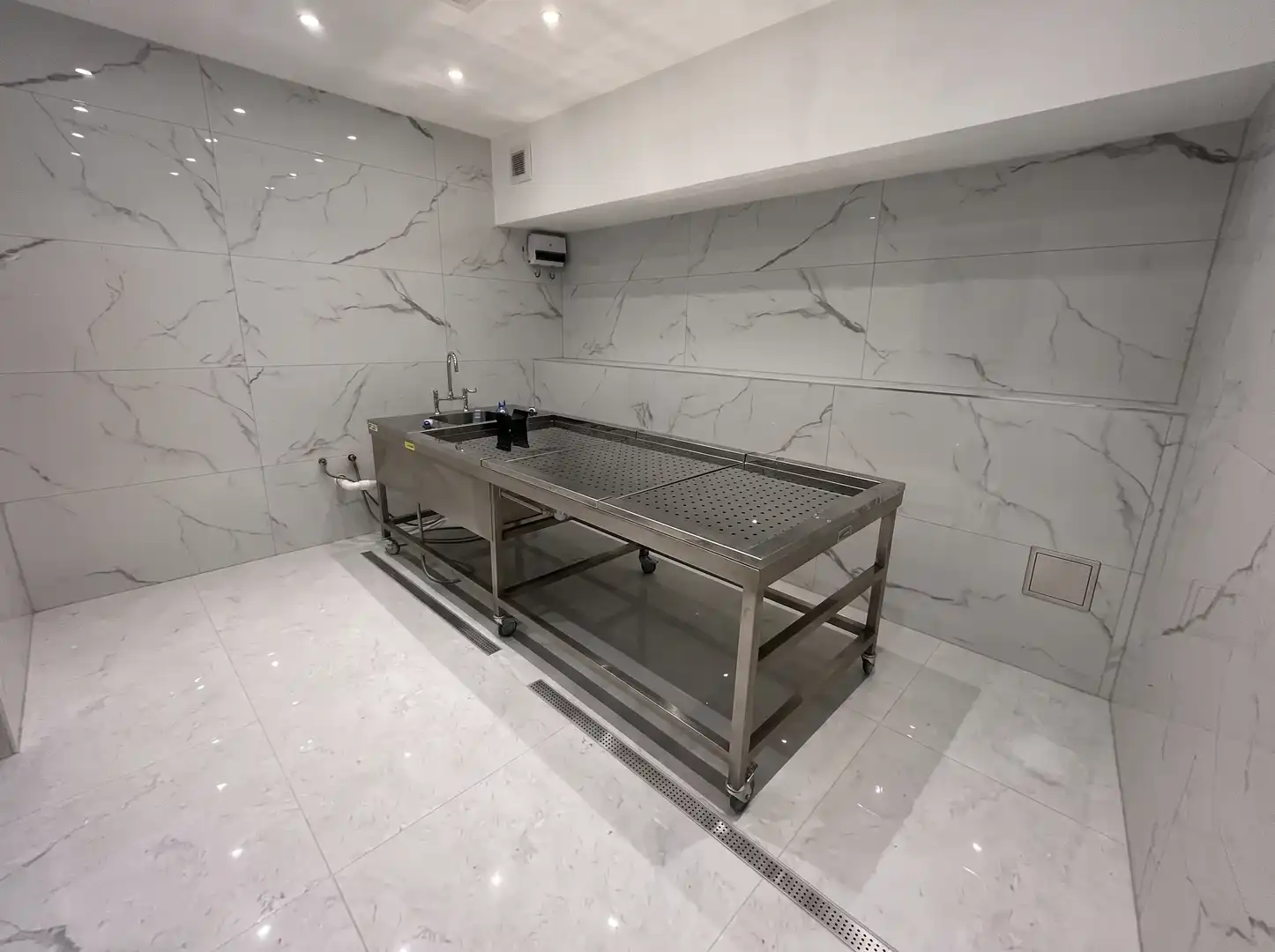
In Islam, caring for the deceased is a responsibility carried out with dignity, respect and compassion. Two important parts of the Islamic funeral process are Ghusl, the ritual washing of the deceased, and Kafan, the Islamic shroud.
For families experiencing a bereavement, understanding these practices can provide reassurance during an emotional and unfamiliar time.
What is Ghusl?
Ghusl is the ritual washing of the deceased before the funeral prayer and burial.
The washing is performed respectfully and according to Islamic guidelines. The deceased is treated with modesty and dignity throughout the process.
Many Muslim families choose to use a dedicated Ghusl facility where trained members of the appropriate gender can carry out the washing.
The purpose is not simply physical preparation. It is an important act of care and responsibility towards the deceased.
What is Kafan?
Kafan refers to the cloth used to shroud the deceased before burial.
The deceased is prepared and wrapped in a simple Islamic shroud. The simplicity of the Kafan reflects the Islamic emphasis on equality and humility in death.
Regardless of a person’s wealth or social position during their lifetime, Muslims return to Allah in a simple shroud.
Who performs the Ghusl?
The people performing Ghusl should understand the Islamic requirements and maintain the dignity and privacy of the deceased.
Depending on the circumstances and the arrangements made by the family, a trained Muslim funeral team may assist with the process.
Families may also have specific religious or family requirements, which should be discussed with the funeral service beforehand.
What happens after Ghusl and Kafan?
Once Ghusl and Kafan have been completed, arrangements can be made for the Janazah prayer and burial.
The funeral team may assist with transportation and coordinate the practical arrangements required for the funeral.
The goal is to make the process as straightforward as possible for the family while respecting Islamic requirements.
A time of dignity and compassion
For families, seeing these arrangements being handled respectfully can bring comfort during an extremely difficult period.
A professional Muslim funeral service can explain each stage, answer questions and support the family from the initial collection through to the burial.
At a time when emotions are understandably overwhelming, having experienced people guide you through the process can make an important difference.
May Allah forgive our deceased, grant them Jannah and give their families sabr during their time of loss.